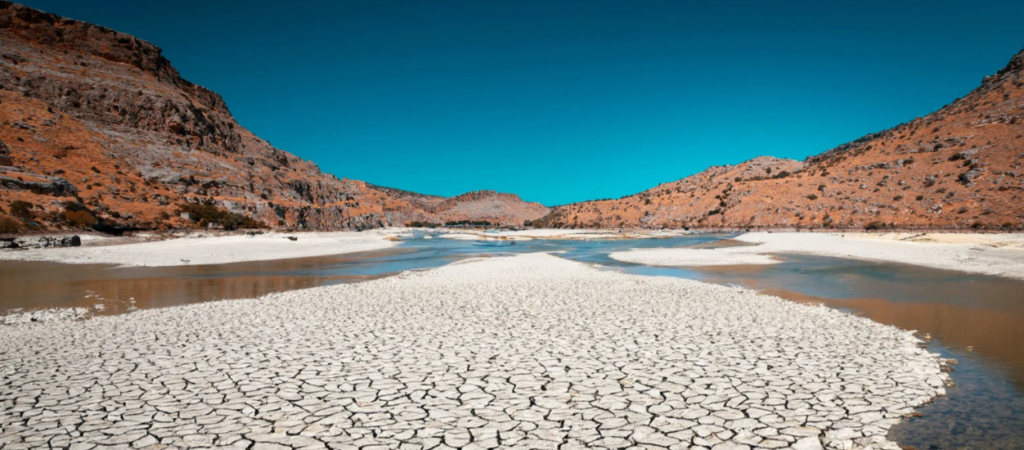
A considerable volume of untreated wastewater is discharged daily into the Mediterranean region. Of the total volume of wastewater produced annually in the MENA (Middle East and North Africa) region, which includes the Mediterranean countries—13.2 billion cubic meters—only 57% (7.5 billion cubic meters) is discharged untreated. However, the MENA region faces a severe water shortage and energy needs that will be exacerbated by climate change, the overexploitation of groundwater, and population growth. In this context, the reuse of treated wastewater is at the heart of current research. It is a crucial sustainable solution, enabling the production of treated effluent for agriculture and energy production from biogas.
The decentralized treatment process DEWATS, includes renewable electricity generation through water electrolysis, hydrogen (H₂) production, methanation, and the use of treated water in agriculture. It also includes fertilizer production and the recovery of CO₂ and CH₄. The process centralizes wastewater treatment plants (WWTPs), resulting in decarbonization through sewage sludge treatment via anaerobic digestion, gasification (SCWG), and thermocatalytic reforming (TCR), leading to the production of hydrogen and methane, respectively.
Chapter title: Valorization of wastewater and sludge for green hydrogen production
Chapter link: https://doi.org/10.1016/B978-0-443-24002-7.00003-3
Book: Accelerating the Transition to a Hydrogen Economy, Elsevier, March 2025

From a strategic point of view, we have proposed the development of centralized and decentralized wastewater treatment technologies, as well as innovative solutions to water scarcity problems within the framework of the circular economy and different methods of energy production.
I would like to express my sincere gratitude to the Book editors, retired Prof. M. N. V. Prasad, Depart. of Plant Sciences at the University of Hyderabad, India and Prof. Marzena Smol, Head of Division at Mineral and Energy Economy Research Institute of the Polish Academy of Sciences, Poland, as well as the all co-authors of this book, for this invaluable experience.
This chapter represents a significant contribution to knowledge and is an essential document for advanced and sustainable wastewater treatment technologies in the integration of climate resilience into wastewater treatment plants.